
|
14.02.2026
11:23 Uhr
|
Joscha Bach is currently the best-known German researcher named in the Epstein files. Now he speaks out: why he took Epstein’s money—and what he was like.
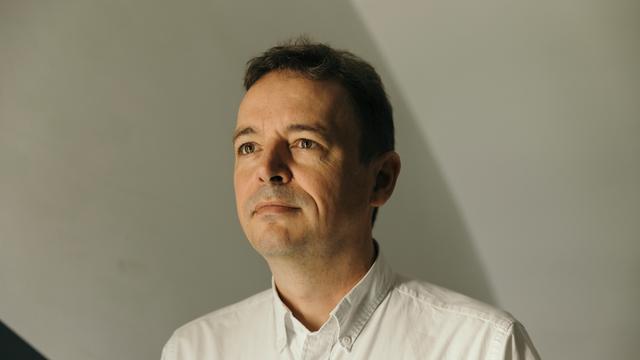
Lesen Sie diesen Text auf Deutsch The cognitive scientist and AI researcher Joscha Bach was funded by Jeffrey Epstein for a research stay in the U.S. between 2013 and 2019. In 2008, Epstein was sentenced to 18 months in prison for soliciting sex from minors. Last week, Joscha Bach sent a statement to Die Zeit, concerning his numerous mentions in the Epstein files. In that statement, he pointed out that interacting with individuals who were convicted of past crimes does not imply an acceptance of their crimes. Nevertheless, he admits: "From today’s perspective, I should have given more consideration to my ethical concerns." The files have not given rise to any legal allegations against Bach. We spoke with him via video call. DIE ZEIT: Mr. Bach, Jeffrey Epstein was closely connected with a number of scientists. You, too, received financial support from him between 2013 and 2019. Is it possible to have been in close contact with Epstein after his conviction without knowing about his alleged crimes during the period in question? Joscha Bach: Here is what I knew: In 2008, Epstein was convicted and sentenced to 18 months in prison, because he had paid for sexual acts in at least two instances, one case involving a 16 year old. He also paid significant sums to a number of young women as part of a plea deal. In my eyes, Epstein’s crimes are unforgivable and inexcusable. In the perception of those who knew him and talked to me about him, he had changed his ways and had not engaged in any new illegal activity. The grave accusations that Epstein was confronted with after his second arrest were very shocking to me. I had never observed any hint of such crimes or legally questionable behavior, and I would have broken off all contact had I done so. I think that was also true for the other scientists in his orbit that I talked to. ZEIT: You encountered Epstein in numerous personal meetups he organized. What kind of person was he, in your experience? Bach: Epstein said that he is incapable of experiencing guilt and shame, that he is unable to submit to any morality apart from what he was able to derive for himself. To me, he seemed to be a person without inhibitions, only doing what he considered to be right. I disagreed with his value system, and I realized that I would not be able to convince him of my own values, because his views had gotten him power, success and wealth. ZEIT: You remained in conversation with him all the same? Bach: I found it interesting to discuss his positions and to get a glimpse into the world of the powerful. Epstein’s view on humanity was crass; he regarded homeless and less intelligent people as inferior. He was afraid to submit to others and be controlled by others, especially by women. ZEIT: You discussed his relationship to women with him? Bach: Yes, I brought it up—but without knowledge of any new accusations against him, beyond his first conviction. His relationship to women in his environment, especially some of his employees, seemed unfriendly at times and disrespectful. This behavior stood in opposition to my values, but it concerned adults in voluntary interactions. There is one email in which he asks me why a young woman had recoiled in horror when he offered her research funding and told him she could not be bought. He was apparently unaware of how others saw him. He said that I was the first person to tell him that he might be a sociopath. ZEIT: Is it true that you even spent an evening on his island? Bach: Yes, I visited him together with the director of a science foundation and his family. I did not observe any signs of illegal or questionable activities during that visit. There is a kind of temple on Epstein’s island and it is the focus of wild rumors. In reality, it contained a library and a grand piano. ZEIT: How did you get in contact with Epstein? Bach: Through the AI researcher Ben Goertzel. He had met Jeffrey Epstein from time to time, and Epstein asked him to give him the names of a few researchers who were interesting and deserved funding. Epstein asked some of the most important AI scientists in his network to evaluate my work. In consequence, I had extensive Skype calls with Roger Schank and Stephen Kosslyn, who interviewed me about my scientific ideas. They recommended to Epstein that he fund me. And they recommended to me that I should accept his funding. ZEIT: What did he expect in return? Bach: Epstein was merely interested in using his money for an interesting project that otherwise would not have been funded. His motivation was that he found the researcher and the project interesting. ZEIT: Didn’t you have doubts, given his prior conviction? Bach: I did ask some people for advice. I traveled to Boston and talked to scientists at MIT and Harvard. I discovered that there was a significant circle of eminent scientists who I deeply admired—Marvin Minsky, Noam Chomsky and others—who were part of Epstein’s network. Everyone I talked to insisted that Epstein had changed his ways after his conviction and no longer broke any laws. And that he had done great services to science, despite his irrecoverable public reputation. Consequently, I decided to accept Epstein’s offer to fund a research stay in the U.S. Back then, I felt that I had the choice between spending the rest of my life in startup companies, or take the opportunity to visit MIT. The price I had to pay was becoming dependent on a single individual. I would not have been able to fund a move to the U.S. and living expenses for a family of four on a postdoctoral salary. ZEIT: In your 2007 dissertation, completed at the University of Osnabrück, you sought to understand the human mind with the help of artificial intelligence. You combined approaches from computer science, the cognitive sciences, philosophy and psychology. Your work won multiple awards. Was there really no other source of funding available for your research? Bach: AI was unfashionable back then. The approach was considered to have failed when it came to understanding the human mind, and scientific funding in Germany was much more geared towards neuroscience. When I applied for a research grant together with philosophers and neuroscientists, we were asked to remove the AI portion from the proposal on the assumption that computation would not be a suitable paradigm for understanding the human mind. I received an offer to continue my research in a military context. But for ethical reasons, this was not an acceptable option for me. It looked to me as though my research interests did not fit into the academic institutions in Germany. ZEIT: In the journal Science, in 2019, Epstein is cited as saying: "I'm all for diversity, but I'm for diversity of excellent ideas, not for diversity in the people who receive grants." Was this opposition to diversity programs, in your view, an important factor in his choice of projects? Bach: It was more decisive that he funded unusual scientists. People who were more common in the scientific institutions in the past than today, like the fathers of AI, people like John von Neumann or Alan Turing. These were individuals that deviated cognitively from the norm, and who often did not conform to normal social expectations. Over time, such people increasingly began falling through the cracks. It became harder for them to find space in universities, because they often pursued unusual questions and had difficulty adapting to the social games. ZEIT: You have referred to yourself as autistic. Did Epstein offer a space for those he considered intelligent but who did not fit in elsewhere? Bach: He organized regular meetups, multiple times per year, to which he invited different people in varying configurations. The linguist Noam Chomsky, the former treasury secretary and Harvard president Larry Summers, famous mathematicians like Misha Gromov and Terence Tao, geneticists like George Church and quantum physicists like Seth Lloyd, once also the far-right Trump advisor Steve Bannon. People from very different camps met at these events, and he let them discuss about science, God and everything.